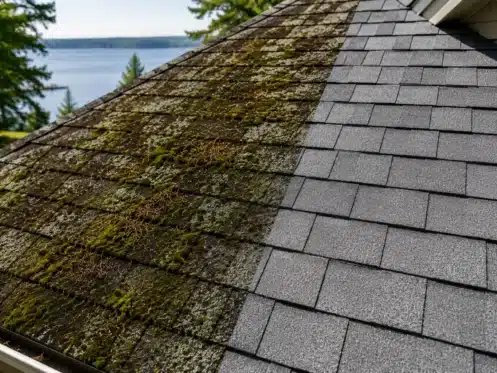
Those dark streaks running down your shingles are not just dirt. In Northern Michigan’s damp, shaded climate, they are usually algae or moss. Left alone, they do more than make a roof look tired. They can shorten the life of your Traverse City roof.
Key Takeaways
- ›Black streaks are usually algae; thick green growth is moss.
- ›Moss traps moisture and can lift shingles, leading to leaks.
- ›Cleaning and zinc or copper strips help prevent regrowth.
Algae Versus Moss
People lump these together, but they are different problems. Each looks different and harms a roof in its own way. Knowing which you have shapes the fix.
Algae and Black Streaks
Algae shows up as dark streaks running down north-facing slopes. It feeds on the limestone filler in asphalt shingles. The stain is mostly cosmetic at first but spreads over time.
Moss and Trapped Moisture
Moss is the thick, green, sponge-like growth on shingles. It holds moisture against the roof long after rain. Michigan State University Extension notes that moss must be killed and then removed, as covered in its roof moss guidance.
Why Northern Michigan Roofs Are Prone
The Traverse City climate is ideal for both algae and moss. Lake-effect moisture and tree cover keep roofs damp and shaded. North-facing slopes that rarely dry out are hit hardest.
Shade and Moisture
Overhanging branches block the sun and drop debris. Damp, shaded shingles never fully dry between rains. That standing moisture is exactly what moss needs.
The Damage It Causes
Moss lifts shingle edges as it grows underneath them. Lifted shingles let water reach the roof deck. Over time that leads to rot and leaks.
How to Remove Algae and Moss Safely
Aggressive cleaning can do more harm than the growth itself. Pressure washing strips the protective granules from shingles. A gentle approach protects the roof while it cleans.
The Safe Method
A 50:50 mix of laundry-strength bleach and water lifts algae and moss. Oregon State University Extension explains that moss killers do not stop regrowth on their own, as noted in its roof moss resource. You still have to remove the dead material gently.
Leave Heavy Cleaning to Pros
Walking a wet, mossy roof is dangerous. Professionals use safe footing and the right solution. They also avoid the pressure washing that voids many warranties.
F S Roofing & Construction LLC clears algae and moss for Traverse City homeowners the safe way. We treat the growth, protect the shingles, and check for damage. You can see how a roof inspection catches problems early.
How to Prevent It From Coming Back
Cleaning is only half the battle in this climate. Prevention keeps the growth from returning. A few steps make a lasting difference.
Zinc and Copper Strips
Install zinc or copper strips along the roof peak. Rain carries trace metal down the shingles to inhibit growth. Trimming back branches lets the roof dry in the sun.
If growth has already damaged your shingles, our Traverse City roofing team can assess the repair. Catching it early protects the whole roof.
Soft Washing Versus Pressure Washing
How you clean matters as much as what you use. The wrong method strips a roof’s protection. Roofing pros favor a gentle approach for good reason.
Why Pressure Washing Backfires
A pressure washer blasts off the granules that shield your shingles. Bare spots then age faster and invite more growth. The Asphalt Roofing Manufacturers Association warns against high-pressure cleaning.
How Soft Washing Works
Soft washing applies a low-pressure cleaning solution to kill the growth. The dead moss and algae then rinse or brush away gently. This protects the shingle surface while it cleans.
Do Natural and DIY Methods Work?
Many homeowners ask about gentler home remedies first. Some help on light growth, but results vary widely. Knowing the limits saves you wasted effort.
Vinegar and Mild Soap
White vinegar can knock back thin algae on a small patch. It is slower and weaker than a proper bleach mix. Heavy moss usually shrugs it off.
Spray-and-Forget Cleaners
No-rinse cleaners let rain wash dead growth away over weeks. They work best as a follow-up, not a deep clean. Thick moss still needs to be removed by hand.
When Cleaning Is Not Enough
Sometimes the growth has already done its damage. At that point cleaning only treats the symptom. A closer look reveals the real fix.
Signs of Underlying Damage
Lifted, curled, or missing shingles point to deeper trouble. Soft or spongy decking means moisture has gotten through. These need repair, not just a wash.
Why a Pro Should Assess It
A trained eye separates a cosmetic stain from real damage. That keeps a small problem from becoming a roof replacement. A pre-winter Roof Repair Near Me search is smart in Northern Michigan.
Frequently Asked Questions
Protect Your Roof From the Green Invader
Algae and moss are slow problems that quietly shorten a roof’s life. Treating them early is far cheaper than a premature replacement. If streaks or moss are spreading on your Traverse City roof, contact F S Roofing & Construction LLC for a safe cleaning.