
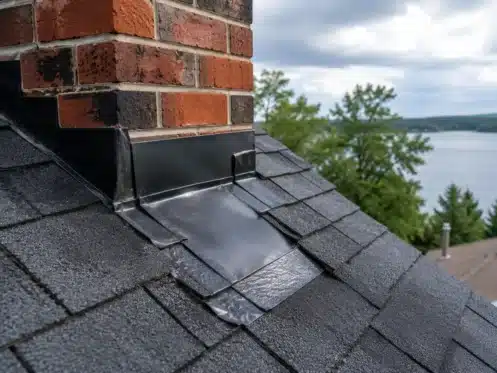
When a roof leaks, homeowners often blame the shingles first. More often, the real culprit is the flashing. These thin metal strips seal the roof’s most vulnerable joints. When flashing fails, water finds its way into your Traverse City home.
Key Takeaways
- ›Flashing seals the joints where a roof meets walls, chimneys, and vents.
- ›Failed or poorly installed flashing is a leading cause of roof leaks.
- ›Fixing flashing early prevents hidden water damage and rot.
What Roof Flashing Does
Flashing is the metal that protects a roof’s seams and transitions. Shingles shed water across open slopes, but joints need extra protection. Flashing covers those weak points.
Where Flashing Lives
You will find flashing around chimneys, skylights, and vent pipes. Step flashing protects where a roof meets a wall. Valley flashing channels water where two slopes join.
Why Joints Leak
Open shingle field rarely leaks on its own. The trouble starts at penetrations and intersections. That is exactly where flashing is supposed to seal.
Why Flashing Fails
Flashing problems usually trace back to a few causes. Some are about age, others about installation. Knowing them helps you spot trouble early.
Poor Installation
Incorrectly installed flashing is one of the most common leak sources. Reused or improperly layered flashing lets water slip behind it. Chimneys and walls are frequent problem spots.
Age and Corrosion
Metal flashing can rust, lift, or pull loose over time. Sealant dries out and cracks at the edges. Northern Michigan freeze-thaw cycles speed that wear.
How Flashing Leaks Damage a Home
A flashing leak is sneaky because it hides. Water enters at a joint and travels before it shows. By the time you see a stain, the damage has spread.
The Hidden Path
Water follows framing and runs far from its entry point. It soaks insulation and the roof deck along the way. A ceiling stain is often the last sign, not the first.
Rot and Mold
Lingering moisture rots the deck and framing. It also invites mold in the attic and walls. Catching a flashing leak early avoids both.
How to Fix and Prevent Flashing Leaks
Some flashing issues need resealing, others need replacement. The right fix depends on the cause and condition. Proper installation is what makes it last.
Repair or Replace
Minor gaps may be resealed with the right roofing material. Corroded or bent flashing should be replaced, not patched. The National Roofing Contractors Association sets the standards for this work at NRCA.
Inspection Catches It Early
A regular inspection finds lifted or cracked flashing before it leaks. Building codes require flashing at roof penetrations, as outlined by the International Code Council. An expert eye spots what a homeowner misses.
F S Roofing & Construction LLC repairs and replaces failing flashing across Traverse City. We seal the joints, replace worn metal, and check for hidden damage. You can see how our roof repair service stops leaks at the source.
If a leak has already reached your ceiling, a roof inspection traces it back to the cause. Fixing the flashing stops the leak for good.
What Flashing Repair Costs in Traverse City
Cost is the first question most homeowners ask. The good news is that flashing repair is usually affordable. Catching it early keeps the bill small.
Typical Price Ranges
A simple reseal or a single vent boot often runs a few hundred dollars. Replacing flashing around a chimney or skylight costs more. That work means lifting shingles and counter-flashing, which adds labor.
What Drives the Price Up
Hidden damage is the real budget risk. If water has rotted the deck below, the repair grows. A small flashing fix always beats a delayed one.
Will Insurance Cover a Flashing Leak?
Homeowners insurance treats flashing leaks in two ways. The cause of the damage decides the outcome. Knowing the difference helps you file a smart claim.
When It Is Covered
A sudden event like a windstorm or fallen tree is usually covered. Hail and storm damage often qualify too. Interior damage to ceilings and drywall may be covered as well.
When It Is Denied
Wear, age, and neglect are the homeowner’s responsibility. A slow leak from cracked sealant rarely qualifies. Document the damage with photos before you call your insurer.
Flashing in Heavy Rain and Snow
Traverse City roofs face driving rain and deep snow. Both expose weak flashing fast. A joint that holds in dry weather can fail under load.
Why Leaks Show in a Storm
Wind drives rain sideways into joints that gravity alone would miss. Failing flashing lets that water slip behind the metal. Many leaks first appear during heavy rain for this reason.
Winter Adds Pressure
Ice dams force meltwater back up under shingles and flashing. Freeze-thaw cycles then widen any existing gap. Booking a fall check beats a frantic Roof Repair Near Me search mid-storm.
Frequently Asked Questions
Stop the Leak at Its Source
Flashing is a small detail that protects your whole roof. When it fails, the damage hides until it is costly. If a leak points to failed flashing on your Traverse City roof, contact F S Roofing & Construction LLC today.